I have been building a server that makes an unusually short journey possible: describe an application to an AI agent, let it build and test it, receive a link, and install the result on my phone. I call it the “everything engine.”
I open Claude Code or Codex, connected to the server, and ask for something: a cooking application, a game, a WeTransfer clone. A small experiment can be usable in five minutes; something more involved might take 45. When it's done, the agent tests the app, publishes it on its own HTTPS subdomain and sends a link to my phone. I tap install, and an idea has become something I can actually use.
Three examples
Approximate times for the first versions, on an already prepared server.
 Sunwise — A visual world clock that compares four cities on an interactive dial, showing local time and daylight. About 10 minutes to make.
 YumYum — A cooking application for importing, organising and cooking recipes, using AI to turn source material into structured recipes. About 45 minutes of agentic coding for the first version.
 Parcel — A minimal WeTransfer clone for uploading files, sharing an expiring link and letting the recipient download the files together as a ZIP. About five minutes to make the initial version.
A prepared environment for an agent
The trick is how little infrastructure each new project needs. The server already has the domain, HTTPS, databases, external services and testing tools, plus written instructions the agent reads before it starts: how to scaffold an experiment, where code and data belong, and how to publish, restart or remove an app. The components are mostly conventional; the documented procedure is what lets an agent turn code into a running application on its own.
The server: about €5 a month
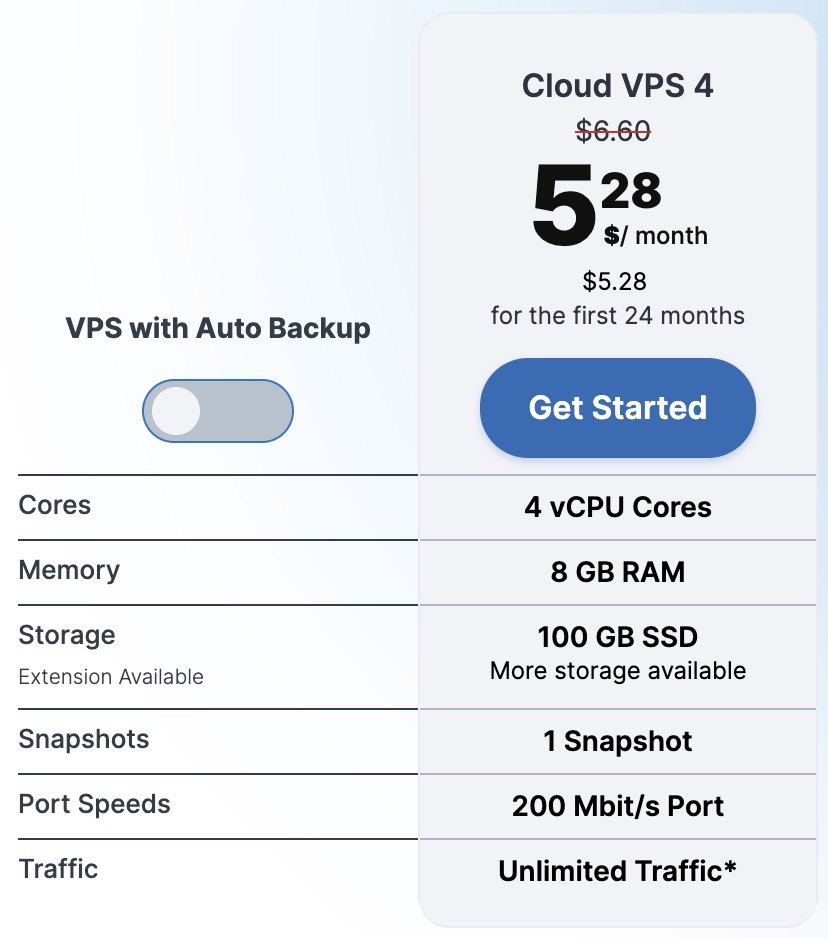
All of this runs on one rented virtual server: a Contabo Cloud VPS 4, with 4 vCPU cores, 8 GB of RAM and a 100 GB SSD. It costs me about €5 a month, for an engine that makes me anything I want in minutes. If you want the same machine, it is on Contabo’s VPS page.