A phone of their own
I made this because I wanted my toddlers to be able to call their grandparents, or us, by themselves. They can’t read yet and don’t know numbers, but they know the people they want to talk to.
I don’t give my kids access to mobile phones, and I’d like to keep it that way for many years. But I do want them to have that connection: to pick up a handset when they feel like talking, or receive a call from a relative without every conversation having to go through me.
Choose a face, not a number
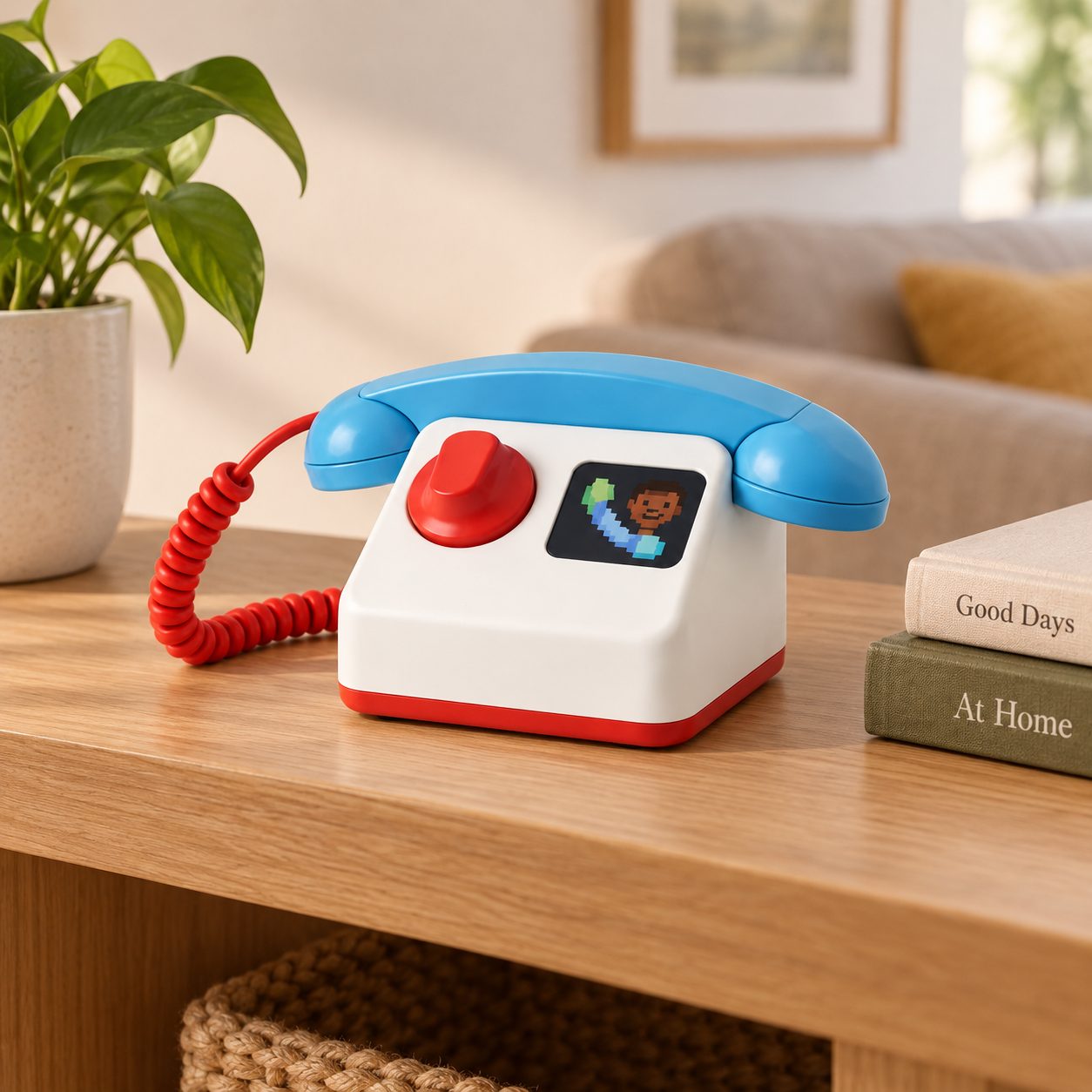
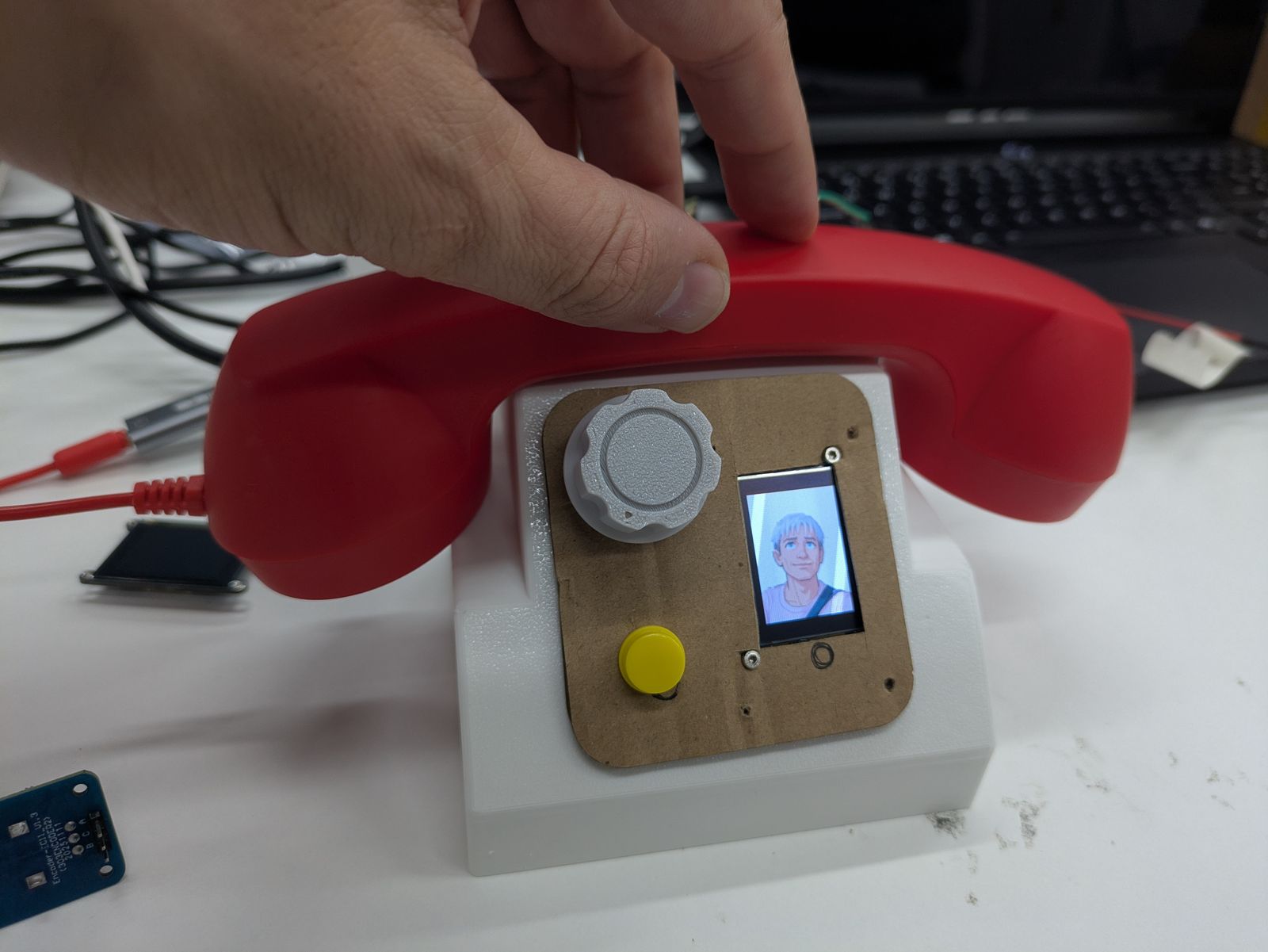
The interface is built around a physical dial, a button and a handset. Turn the dial to choose a familiar face, then press the button to connect. There’s no reading or number dialling involved.
I wanted to avoid screens and distractions. The prototype does have a small display, but its job is simply to show who they’re choosing. The idea is to make room for a conversation, without handing over a smartphone.
Talk now, or leave a message
I’m exploring two ways of using it. One is asynchronous: send a voice message and listen to a relative’s reply later, much like WhatsApp voice notes. The other is a live call.
These currently exist as two separate prototypes. Voice messages use Telegram; live calls use SIP, a voice-over-internet system, and ring in the Linphone app on the relative’s mobile. Calls between these internet accounts are free, rather than calls to ordinary mobile numbers. The aim is for reaching Grandma to feel as simple as calling a WhatsApp contact.